
An Afternoon in Munich, One Printed Page, Three of Us
How Urban Quest Adventures started, in the founder's own words.
Why this exists
The One Printed Page
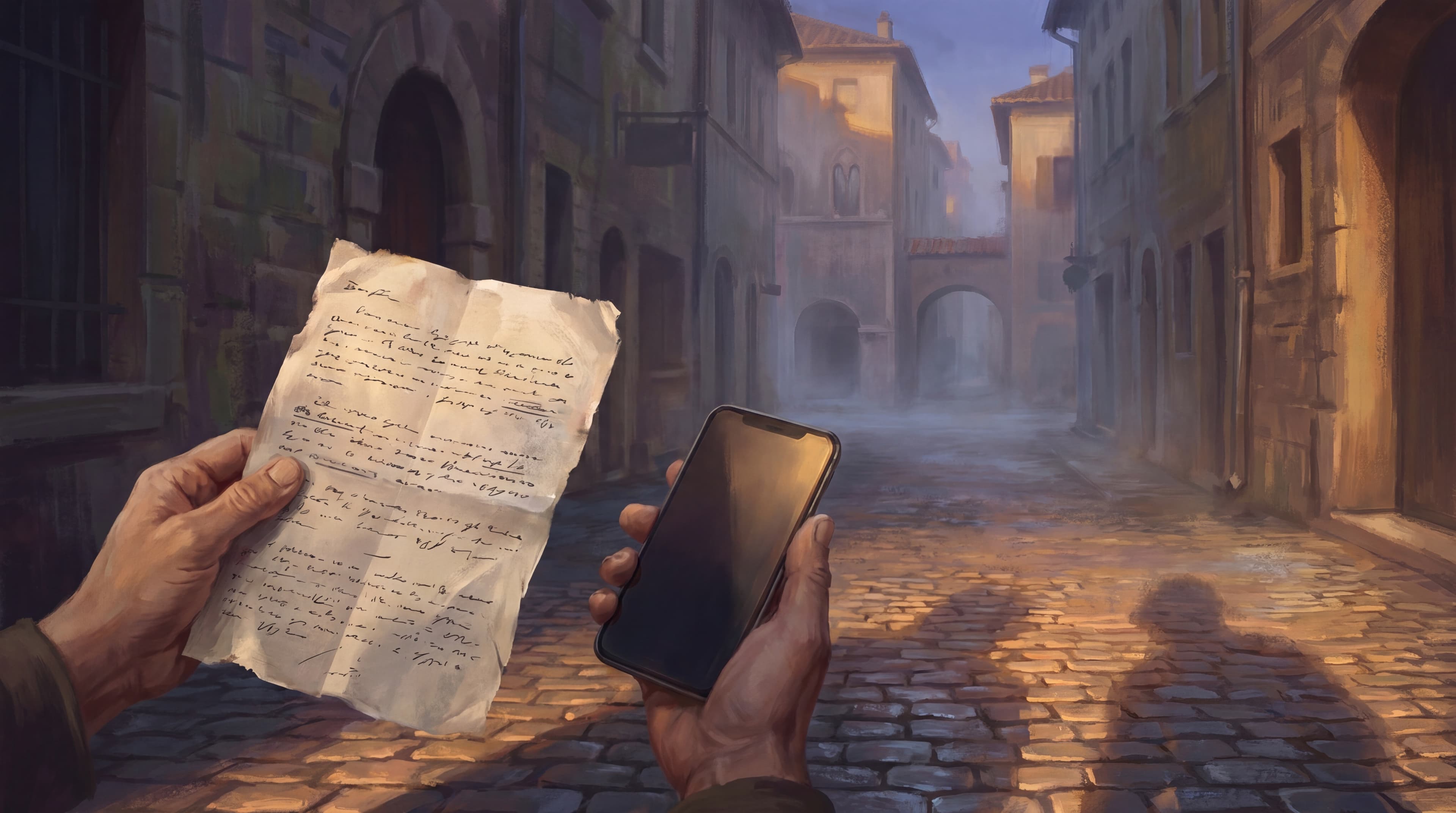
A few years ago I did a scavenger hunt in Munich with two friends. The three of us, out on the street, tried to share one printed A4 page between us. We had to mark answers on it as we went — tick off clues, scrawl numbers, write things down — so the sheet was always being passed around. Only one person could read it at a time. While one read, the other two waited or guessed. That's the part you remember from a bad scavenger hunt: the waiting.
The hunt did use the buildings around us. You'd stand in front of a church or a gatehouse and answer something about it. But the questions never connected to a story worth caring about. The architecture ended up as stage dressing for a chase plot — a rogue agent on the run — that nobody in our group believed. The city around us was more interesting than the experience we were having. We walked past real history — doorways, inscriptions, side streets full of it — while answering trivia about fiction.
I walked home thinking about two things at once. The first was obvious: a phone could replace that piece of paper. Three people could see the same screen, tap the same clue, contribute at the same time — no more passing one sheet around. The second took longer to land. If the whole experience became "everyone looks at their own phone," it would break the very thing that made the afternoon special: being three people in it together. The answer was the city. The challenges had to live in the architecture, in the inscriptions, in the side-streets — the phone as a shared compass, not a wall between us. The landmarks themselves do half the work, if you let them.
The other decision was the story. I did not want another agent plot. Not because action is wrong — action is fine — but because the cliché was where the afternoon had gone flat. If we were going to ask people to walk for two hours, the writing had to earn that walk. Researched. Atmospheric. Tied to what they were actually looking at. That idea became Urban Quest Adventures.
— Max, founder
How we make a quest
The Craft
A quest is not a PDF with checkpoints. It is a piece of writing pinned to a real afternoon in a real city. That shapes how we make one.
How a quest is built
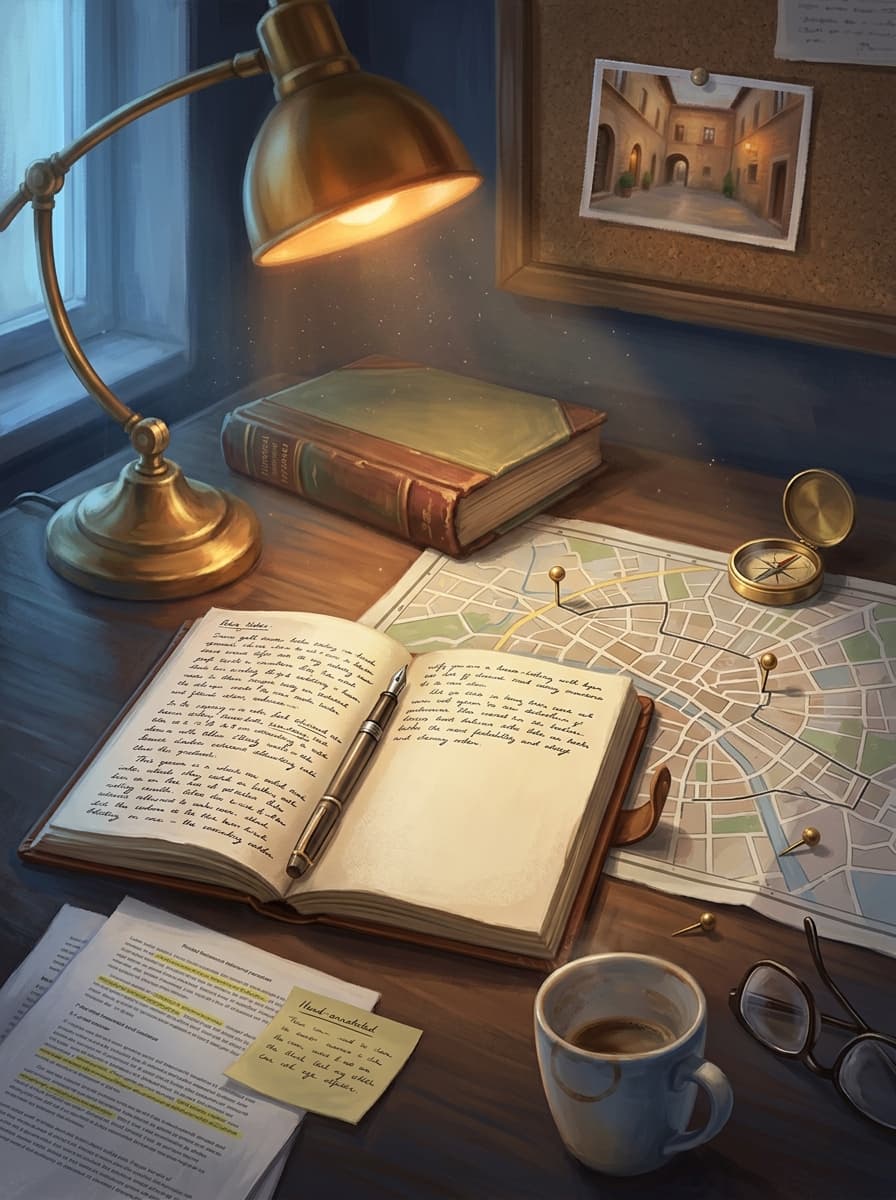
Every quest is curated — one editorial voice per city, one story worth walking for. Sources are historical, the route is walked before anyone pays to walk it, and publishing waits on atmosphere.
- Source. Period maps, archival images, primary historical records. Nothing invented about the city; every fact points back to somewhere you could find it yourself.
- Curate. One editorial voice per city — one person who reads everything, shapes the raw material into a story worth walking for, and says when it's done.
- Walk-test. Every quest is walked end-to-end before anyone else sees it. If a clue doesn't land on the street, it's rewritten.
- Publish. Technical correctness is the floor; atmosphere is the bar. If a chapter is correct but flat, it waits.
Why we don't call it a tour
A tour hands you facts. A quest hands you a city and asks you to notice it. The difference is not a marketing line — it is the reason the writing has to be this specific. A guide recites dates; a quest sets them where they belong, in an archway you are standing under, in a courtyard you just pushed open.
We refuse the word "tour" for the same reason we refused the agent plot. It is the register that flattens the afternoon. We would rather be accurate and atmospheric than easy to categorise. If that means we sit in an awkward shelf between travel product and short fiction, that is the shelf we meant.
Start where we started.
Munich is where the idea was born and where the first quests live. More cities are on the way.